Home / Blog

BladeFoundry blog on knife steel and kitchen care

The BladeFoundry blog covers Damascus steel, edge care and the small habits that quietly wreck a good chef knife in a Hamilton kitchen.

01 Why this exists

We write when something at the bench has annoyed us enough

There is no editorial calendar behind this blog. Articles appear when a batch of billets comes out strange, when a customer's knife arrives with damage that turns out to be extremely common, or when the same question has been asked four times in one week and it would be faster to write it down. That means fewer posts and, hopefully, ones that actually answer something.

Everything here is written by the people who make the knives, so the numbers are the numbers we use, not a manufacturer's marketing sheet. If an article describes 60 HRC at the core, that is what the blades come off the temper at. If it says a certain chip pattern comes from a glass board, it is because we have seen that exact chip about sixty times and can usually name the board it happened on.

02 — All articles

Two pieces from the Hamilton workshop

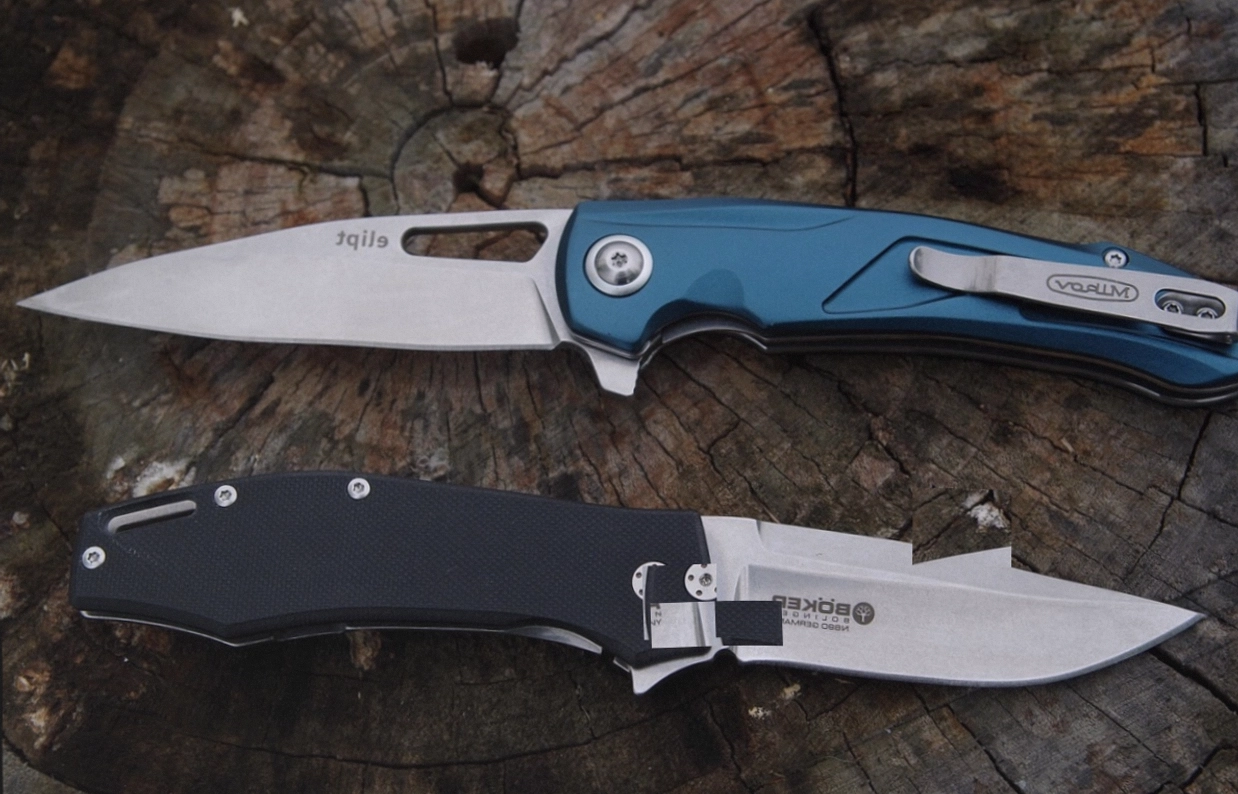
Two Damascus knife blades showing completely different layer patterns
Steel · 9 min read

Why Damascus Patterns Never Look the Same Twice

Two billets, same 1084 and 15N20, same fold count, and the patterns come out nothing alike. This piece goes through what actually decides where the layers land: the starting stack, the direction of each fold, how far the billet is drawn out, and the temperature on the day. It also explains why a mirrored pattern across a set of knives costs more than a single blade, and why we can describe the feel of a pattern but never promise you one.
Read the article
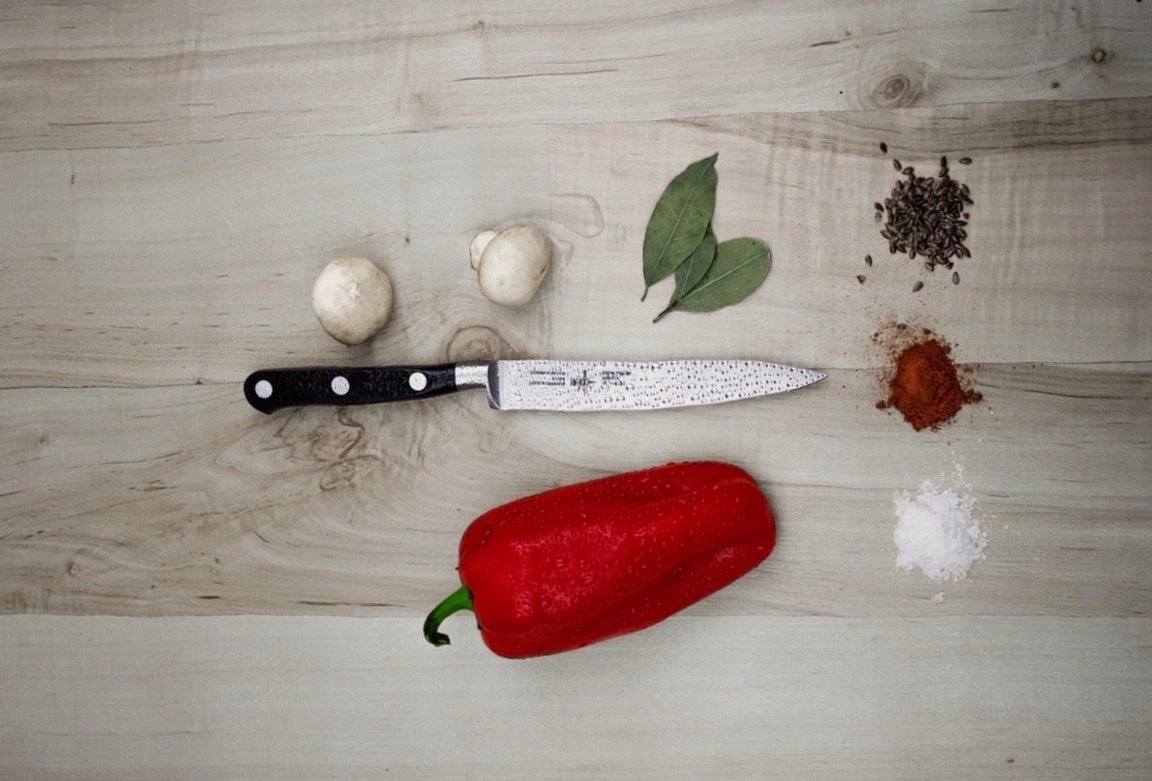
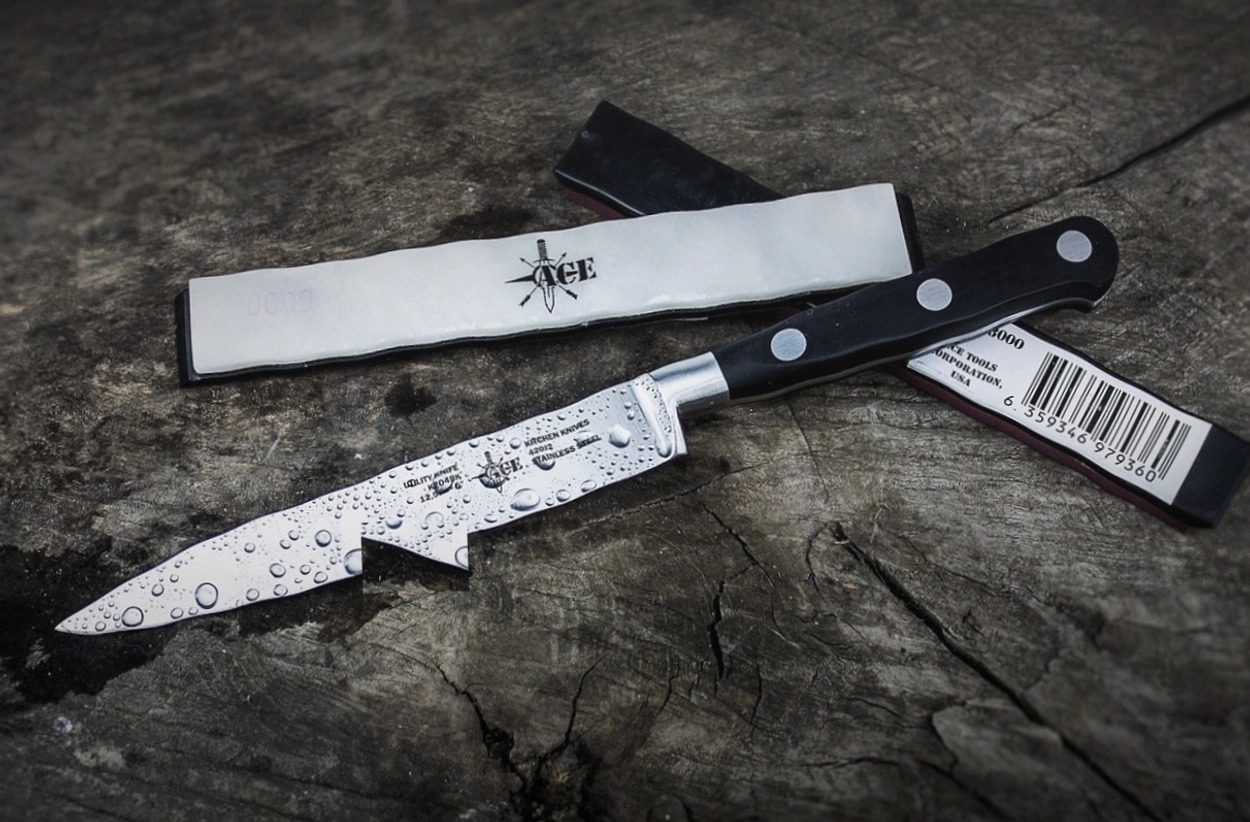
A kitchen knife with a chipped edge lying on a cutting board
Care · 7 min read

What Actually Ruins a Kitchen Knife

Fourteen years of sharpening and repair have narrowed it down to the same handful of habits, and almost none of them are the steel's fault. The sink, the drawer, the glass board and the frozen chicken that gets prised apart. None of these take more than four seconds, and all of them cost more to fix than a proper board costs to buy. Worth reading before you spend NZ$690 on a handmade knife.

Read the article
03 — What gets covered

Four subjects we keep coming back to

If you want us to write about something specific, it is worth sending a message. Reader questions are the easiest posts to write because the answer already needs to exist somewhere.

Suggest a topic
  • Steel Fold direction, layer counts, powder metallurgy and why 63 HRC does not automatically mean a better knife than 60.
  • Heat treatment Normalising, soak times, quench mediums and what the odd warp actually tells you about the steel.
  • Care Sharpening angles, stone progression, drying, oiling and the storage habits that save an edge for years.
  • Workshop life Handles, timbers that survive Waikato humidity, restorations, and the occasional commission that goes sideways.
04 — The knives behind the articles

Both lines, in full detail

See every price
Damascus steel chef knife with a fluid layered pattern A

Damascus Steel Chef Knife

Hand-folded 1084 and 15N20 anywhere between 180 and 320 layers, sitting around 60 HRC at the core after a two-stage temper. The blade we write about most, largely because the pattern questions never stop coming.

See the Damascus knife
Powder steel chef knife with a fine satin finished blade

Powder Steel Chef Knife

R2 powder metallurgy steel at 63 HRC, with a fine carbide structure that sharpens fast for how hard it is. This is the knife most of the working chefs in the region order, and the one that turns up on our service bench least often.

See the powder steel knife
Sharpening

Reprofiling, thinning behind the edge and stone work for any knife, not just ours. NZ$45 for a standard chef knife, NZ$70 over 240mm.

Rehandling

New scales in stabilised hardwood or micarta, shaped to your grip and matched to the original blade profile. NZ$180 plus materials.

05 — Where the writing comes from

Same two people who make the knives

Callum writes the steel and heat treatment pieces, because those are the parts of the process he still loses sleep over. Rangi writes most of the care and sharpening material, since he runs the service bench and sees exactly what happens to a good knife over two or three years of real use. Nobody ghost-writes anything here, which is why the posting schedule is erratic.

Read the piece on what ruins a knife and realised I had been leaving mine in the drying rack overnight for years. Bought a magnetic strip the next week and the edge on my old knife lasts twice as long.

Nathaniel Purcell
Nathaniel Purcell Reader, Hamilton Lake

The pattern article answered a question I had been trying to ask three knifemakers about. It is the only place I have seen it explained without any mystique about it, just what actually happens to the billet.

Georgia Hartstone
Georgia Hartstone Reader, Morrinsville

New pieces land roughly every few weeks

The best way to hear about a new article is the monthly newsletter, which also mentions finished batches and the odd cancelled commission going cheap. It goes out from BladeFoundry at 181 Kahikatea Drive in Melville, Hamilton 3206, and you only ever get one message a month. Subscribe from the form on the homepage, or ring +64 7 849 3027 if you would rather just ask your question directly. How we handle reader details sits in the Privacy Policy.